

Local hospitals’ communications professionals charged with spreading the news about their organizations. They share their experience
By Jolene Cleaver

On any given day, while physicians and nurses move patients through hospital operating rooms and emergency departments, communications teams work parallel tracks, fielding media calls, drafting statements and preparing for the next unexpected crisis.
Hospital communicators from three Mohawk Valley area hospital systems, Bassett Healthcare Network, Oneida Health and the Mohawk Valley Health System recently shared with In Good Health the behind-the-scenes of bridging the public information gap between clinicians and their community.
All agree that as hospitals navigate financial strain and heightened public expectations, the role of the health care communicator has become as essential as any other member of the care team.
Representatives from Rome Health and Community Memorial in Hamilton were contacted for comment but didn’t respond to requests for interviews.
Here’s what they had to say in a Q&A
Q. How did you land your current role and what previous experience best prepared you?
•Caitlin McCann, vice president of marketing and communications at MVHS: “I joined Mohawk Valley Health System [then Faxton St. Luke’s Healthcare] in 2012 as a communications specialist and worked my way up to my current role as vice president. Prior to MVHS, I worked in marketing and communications across several industries, including county and state government, book publishing and the restaurant industry.”
• Sara Reinhardt, marketing and development director at Oneida Health: “I came to this role with 30-plus years of experience in marketing, communications and community engagement, along with many years collaborating closely with clinical teams. That work helped me understand the operational realities of healthcare and the importance of clear, accurate messaging.”
• Jennifer Steller, media relations specialist at Bassett Healthcare Network: “Before working at Bassett, I worked in local TV news for over nine years as a producer at WTEN News10 ABC and executive producer at WRGB CBS6 News, both of those stations are in the Albany area. I landed my current role the way most people do, through an online job posting. I had recently left the TV news business and was looking for opportunities that would allow me to still be a storyteller and engage with important topics that impact people’s lives. Working in healthcare communications allows me to do just that.”

• Gabrielle Argo, director of corporate communications and public relations at Bassett Healthcare Network: “I began my career journey in healthcare communications [and at Bassett] in my early 20s. I had been working as an executive assistant at a finance firm in the greater New York City area. My soul was not happy working in the numbers world, so when one of my former college professors messaged me on Facebook one summer afternoon and told me the marketing director at Bassett Healthcare Network was looking for a writer, it got my attention. I applied for the position, an entry level communications specialist job and was hired.”
Steller added she, “did not expect that one of my most important audiences (aside from our patients and communities) is our own employees. Providing them with key operational updates, stories and information helps them be successful in their jobs and this in turn helps us care for our patients better.”
Q. When people think of a hospital, they usually picture doctors and nurses. What are some of the behind-the-scenes roles or systems the public rarely sees, but that are critical to keeping patients safe and care running smoothly?
• McCann: “Behind every clinical interaction is a network of professionals and systems working around the clock. This includes lab and imaging teams providing critical diagnostic information, physical and occupational therapists helping patients regain function and nutrition services ensuring patients receive appropriate care through food and diet planning. Communications teams also play a key role, making sure accurate information reaches patients, staff and the community in real time.”
• Reinhardt: “Many people don’t realize how much communication powers safe patient care. Our electronic health record system allows providers, primary care, specialists and behavioral health to securely share real-time information across our locations and departments. This coordination ensures patients receive consistent, informed support. Beyond clinical teams, communications staff keep 1,800 employees aligned through timely updates, protocols and announcements via emails, signage and the intranet and internet.”
• Steller: “When I think about the unsung heroes of our network, I think first of the environmental services workers who keep all patient areas clean and safe as well as the maintenance workers who keep our facilities operational and accessible. Recruitment and retention remain major priorities for our network, so I also have to shout-out all of the hard-working individuals on our network’s human resources and medical staff recruitment teams.”
•Argo: “I often compare hospitals and clinics to stage productions. The actors on stage are visible to the audience, but it takes many, many more people to put on the show and keep the production going. This is also true in healthcare. Our caregivers at the bedside play a front-and-center role for our patients and communities (and rightly so). But without our housekeepers, food service workers, maintenance specialists, IT technicians, laboratory experts, groundskeepers, security personnel, shuttle drivers, recruitment professionals and literally thousands of others administrative and otherwise, operations would simply come to a standstill. There are also many disciplines little known to the community that I have a privilege of being part of, including our hospital incident command team (a large group of experts who work together to prepare for disasters and emergencies).”
Q. Can you walk us through what actually happens inside the hospital from the moment a patient arrives to the moment they’re discharged, especially the parts most patients don’t realize are happening?
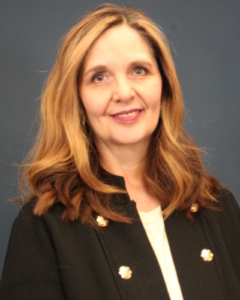
• McCann: “From the moment a patient arrives, an entire care network activates behind the scenes. Registration and triage teams collect information and assess urgency, while clinical staff coordinate tests, imaging and consultations. Pharmacists review medications, care managers plan next steps and therapists evaluate recovery needs. Simultaneously, multiple departments track patient flow, bed availability, lab results and discharge planning through shared systems, all to ensure safe, timely care and smooth transitions once the patient leaves the hospital.”
• Reinhardt: “From the moment a patient arrives, communication drives every step. Registration inputs essential information into our EHR, allowing clinical teams to coordinate testing, treatment and medication in real time. Behavioral health and primary care providers collaborate through shared records to support the whole patient. Behind the scenes, communications staff deliver important updates to all of our locations, ensuring employees follow the same protocols and safety guidance. This coordinated messaging is invisible to patients but essential to their care and for our staff to stay up to date on rapidly changing information.”
• Steller: “The process can vary depending how the patient arrives, what their condition is and what services they require. Ultimately, a patient’s care requires a lot of teamwork and collaboration between caregivers in different roles. They might be taken from the ambulance by a patient transport professional or admitted to a room by a nurse, seen by a doctor, cared for by a specialist or a surgeon and anesthesiologist and the list goes on from there.”
• Argo: “A patient’s journey through the hospital depends on many factors, like how sick they are and what care they need. What does not change is our focus on the patient’s comfort and healing, as well as their loved ones. When you arrive at a Bassett Healthcare Network hospital, you can expect to entrust your care to people who will treat you like their own family and neighbors. In some cases, you may be.”
Q. What are some common misconceptions the public has about how hospitals operate and what would you want people to understand better about the decisions being made every day?
• McCann: “One common misconception is that hospitals operate with unlimited resources or that decisions are made in isolation. In reality, hospitals balance patient safety, staffing, regulatory requirements, financial constraints and community needs every day. Many decisions must adapt quickly to changing clinical guidance, patient volume or emergencies. I would want the public to understand that even when processes feel complex, decisions are driven by safety, quality and the responsibility to provide the best possible care for every patient.”
• Reinhardt: “Nearly every decision relies on coordinated communication across 1,800 Oneida Health employees and 14 locations. Another misconception is that messaging is simple when it actually requires drafting, verification, approvals and multi-channel distribution to staff and the public.”

• Steller: “Almost every single person that I’ve spoken to at Bassett has shared that they first chose their career out of a desire to help other people. This is especially true of the doctors, nurses and all who are directly involved in patient care. I think that’s the most important thing for people to understand, this desire to provide care and support to others, who may possibly be facing the most difficult moments of life.”
• Argo: “It’s important for our communities to understand that every decision, at every level of the organization, every day, is made with the patient top of mind. Everything we do revolves around improving patient care, experiences and access. Whether we are recruiting caregivers, upgrading diagnostic tools, expanding and renovating clinic facilities or replacing equipment, these initiatives are all focused on improving the quality of the care we provide. This is why it is important for rural healthcare systems to maintain a sustainable business model so we can be here for years to come and serve the people and communities who depend on us.”
In additional remarks, the spokeswomen emphasized the team effort and community that is crucial to a functioning hospital system.
Among responses, Reinhardt said, “Our communications team doesn’t do this alone. A hospital functions much like a mini city, with countless teams working behind the scenes to support every patient. But none of it works without strong communication. It’s the constant flow of information, collaboration and shared purpose that allows our teams to move as one.”