
Local cancer patients share their stories: Pay attention— get checked out, they say
By Jolene Cleaver
For Stacey Gaughan and Abigail Carr, their breast cancer journeys began with something small: a lump they happened to notice.
For Gaughan, of Springfield Center in Otsego County it was eight years ago, when she was 34 and working as a nurse. For Carr, it was a fluke, a moment in the middle of the night when she rolled over to get out of bed and her hand grazed an area of skin that revealed something concerning.
Neither could have known how much those discoveries would change the years that followed.
Their diagnoses, treatments and experiences have been different. But both women have learned the same basic lesson: Know your body, pay attention to changes and do not put yourself last.
Here are her stories:
Full-time Triage Nurse Battles Stage 4 Breast Cancer
‘Find your happy place. Find a support system’
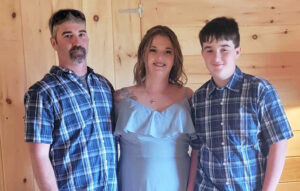
For Stacey Gaughan, the discovery of a lump in her breast was the beginning of a journey that would eventually take her through multiple rounds of treatment and a stage 4 diagnosis.
She was initially diagnosed with stage 2 breast cancer.
Treatment through the Bassett Network has included 20 weeks of chemotherapy, a double mastectomy, a hysterectomy and reconstruction. She also spent four years taking hormone medication to stop the cancer’s growth. Genetic testing found a BRCA2 gene mutation, which was hereditary.
But four years later, the cancer had progressed.
At 38, Gaughan learned the cancer had reached stage 4 after a lump was found on her collarbone. Treatment continued with oral medications, another two and a half years of chemotherapy and doses of radiation.
The cancer has also spread to her spine, liver and sternum.
“There’s a node near my heart,” she said.
Pain control has become part of her continued, ongoing care.
Yet amid the treatments and the difficult days, Gaughan has continued working. Today, at 43, she works full-time as a triage nurse in women’s health.
Life is not always predictable. There are good days and bad days, she said. Some days, she doesn’t get out of bed. Other days, she feels good. When she does feel good, one place she turns to is Otsego Lake. Boating has become her happy place.
“Find your happy place. Find a support system. You definitely need people,” she said.
Finding that support system was not always easy, as Gaughan said she was accustomed to helping others and had to learn to ask for help herself.
That lesson has changed how she approaches life. Now, she focuses on spending quality time with her family and seizing opportunities whenever possible.
It has also shaped the advice she gives to other women beginning their own cancer journeys.
“If there’s changes, get a hold of your provider as soon as possible. Even a small change is worth having checked,” she said.
And while information can be helpful, Gaughan also cautions people to be thoughtful about where they get it. When researching cancer, she advises people to know their sources and avoid going down rabbit holes.
Taberg Resident Finds Lump in Her Breast Almost by Accident
‘It was a fluke that I even found it’

For Abigail Carr, the discovery she had a lump in her breast came much more recently and almost by accident.
Carr’s breast cancer journey began in 2025. On Oct. 13, the Taberg resident, now 46, found a lump while rolling over in the middle of the night to get up to go to the bathroom.
“It was a fluke that I even found it. … I grazed it with my hand,” she said.
Carr made an appointment with her doctor and after a mammogram and ultrasound were completed, she received a call letting her know the mass appeared malignant. Ultimately, testing showed the mass was 9 millimeters in size.
The diagnosis set a rapid series of appointments and procedures in motion through the Oneida Health network.
On Oct. 30, Carr had biopsies performed on both her right and left breasts, as well as a lymph node in her right armpit.
In December 2025, she began her first round of chemotherapy.
Carr’s treatment was a TCHP cocktail consisting of Taxotere, Carboplatin, Herceptin and Perjeta. The treatment was given every three weeks for a total of six rounds.
The effects of treatment soon became impossible to ignore. Her hair fell out before her second infusion. By Christmas Eve, she had lost enough hair that she had her mother and a family friend shave her head. She was also tired all the time and constantly sick.
“It’s totally kicked my butt,” Carr said of her treatment regimen.
On April 2, 2026, Carr completed her final round of chemotherapy. On April 22, she received her first PHESGO shot, a medicine combining the targeted therapies pertuzumab and trastuzumab with hyaluronidase. She is scheduled to receive 12 rounds, given every three weeks and is now halfway through the treatment.
On June 3, Carr underwent a bilateral mastectomy with lymph node removal and tissue expander placement.
It is believed that the surgery removed everything, but because of the lymph node involvement, she will undergo radiation treatments.
Carr is waiting to begin 28 rounds of radiation, given Monday through Friday. Sometime next year, she expects to have the tissue expanders removed.
Coping
Carr has worked through the entire ordeal at her accounting department job at the Madison County Department of Social Services.
When treatment has been particularly difficult, she has tried to find ways to make herself laugh. She makes funny videos with wigs and costumes, using humor as a way to maintain some sense of normalcy.
“I’ve been pretty upbeat about it,” she said.
At one time, “it was hard for me to admit I had cancer. It felt like it was someone else,” she added.
Now, she said, she understands that the fear of cancer is not limited to a particular diagnosis.
“It doesn’t matter what stage you are diagnosed with, it’s scary for everyone,” she said.
As Carr moved through treatment, she also found comfort in familiar connections.
Through it all, she has learned to give herself some grace. She encourages other women to try the medications they are given and find what helps them feel better, including simple things such as heating pads.
“Only you know your body. You can’t go by anyone else’s experiences,” she said.
That message is particularly personal for Carr. Her maternal grandmother had breast cancer. But for years, Carr said, she put herself on the back burner while caring for her family.
Her message now is simple.
“Don’t neglect yourself,” she said.
Paying attention
Gaughan and Carr arrived at their diagnoses through very different paths. From there, both entered medical journeys that would reshape their lives. Their treatment plans have been different. But both have had to adjust to a life shaped by appointments, medications, procedures and uncertainty.
And both have found ways to keep moving forward.
For Gaughan, that means time on Otsego Lake, time with her family and finding a support system. For Carr, it means working through treatment, finding humor where she can and learning to give herself grace.
Their stories ultimately come back to the same place: paying attention.
A change may seem small. It may happen at an inconvenient time. It may be tempting to wait and see what happens.
But both women know now that it is worth stopping, paying attention and getting it checked.