
What readers can learn from my experience
By David L. Podos
The number of people in the United States 65 and older that fall and require medical attention is staggering.
Based on data from the Center for Disease Control as well as data from the National Council on Aging, approximately 14 million seniors fall each year. Out of those falls, nearly nine million will result in receiving some form of medical attention. Even more disturbing, nearly 41,000 older adults will die from a fall-related injury each year.
Living in the Northeast adds an additional element of caution, navigating through the winter season. While walking in the snow can be an impediment for older adults, ice is often the real culprit when it comes to falling. Research data from emergency rooms and trauma centers clearly shows that ice is significantly more of a hazard (in regarding to falls for seniors) than just walking in snow.
As of this writing, I am still recuperating from a nasty fall I had back in mid-December. Walking off my back deck, I was unaware of the black ice that was hidden under the inch or so of snow on the top deck step. One moment I was stepping down, the next I was laying in my driveway. The fall was so forceful that I actually passed out.
After going to urgent care and having X-rays, it was determined that I had severely dislocated my shoulder and was told I needed to go to the hospital. I had to go under anesthesia for the doctors to get the shoulder back in place. Now I am six weeks into physical therapy and most likely, months before I gain back my range of motion and strength.
Of course, there are many other reasons why seniors fall besides slipping on ice.
Many medications that older people take have side effects that can cause dizziness and imbalance. Good thing to do is always check in with your doctor if you feel that your medication is making you feel weak, light-headed or dizzy. Eye issues are another problem. For example, glaucoma. Glaucoma, (optic nerve damage), is often called the silent thief of sight. This is because, (most often), there are no symptoms until the person starts to lose their sight. People who are 60 and older are six times more likely to develop glaucoma than those who are younger. If you are having trouble seeing, you are certainly at risk of falling. Having an annual check-up with an ophthalmologist to determine your eye health is the best prevention.
Falls at home are another leading cause of injury for seniors. While you may not be able to “fall proof” your home to guarantee no one will ever fall, there some simple things one can do to greatly minimize the risk.
Here are just a few things you can do to minimize falls:
• When carrying things like bags of groceries or laundry baskets into and through the house, try to keep one hand free to use handrails or furniture as balance.
• While many of us don’t give it a second thought (including me), don’t wear just socks while walking across wood floors. It is like walking on ice when you do. Wear shoes or slippers with good rubber-backed soles for gripping.
• Get rid of those throw rugs. They can be a disaster waiting to happen. If you are going to use throw rugs, be sure they are secured to the floor using double-sided carpet tape.
• Don’t forget the importance of exercise. Modern longevity experts Peter Attia and Gabrielle Lyon say balance is a primary indicator of all neurological health. One of the more common benchmarks in regard to balance is the one-leg test. Experts say that people older than 60 should be able to stand on one leg for at least 10-30 seconds.
• Many local libraries offer beginner yoga classes and more specifically, yoga classes for seniors that concentrate on balance. These classes are often free and are great way to work with a trained yoga instructor in a safe environment.
• Don’t forget that on You Tube there are countless videos on balance exercises for seniors. Play them on your TV, personal computer or your smart phone. In the end, you want to stay vertical, not horizontal.
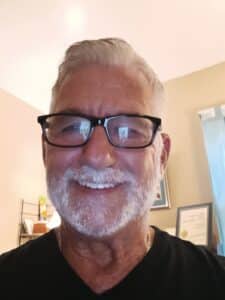 David Podos is a contributing writer for In Good Health. He lives in Utica.