
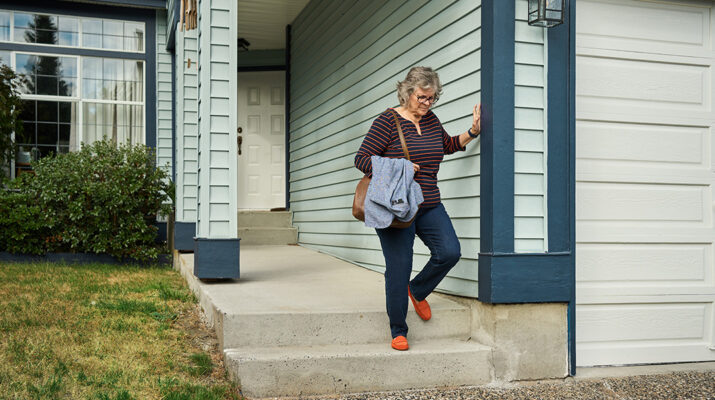
Local offices for the aging help older adults remain in their homes independently for as long as possible
By Barbara Pierce
According to AARP, 77% of us older than 50 want to remain in our own homes as long as possible.
However, we’re living longer than we have in the past. As we age, our bodies undergo gradual changes. Our mobility declines; many older folks need to use a walker or wheelchair to get around. Our strength decreases; our sight and hearing decline. The risk of dementia increases with age.
Our houses were designed and built before this boost in longevity. Our houses are not suited to our needs as we age because our body just doesn’t work as well as it did. Our houses don’t suit us because of physical barriers, maintenance burdens, poor lighting and the lack of funds to make needed home modifications.
It’s a sad reality that 70% of us who survive to age 65 will face significant health challenges and will need help with activities of daily living, according to the U.S. Department of Health and Human Services. No, the odds aren’t in our favor.
Sometimes, growing older feels like one loss after another. No longer being able to drive or stay in our own home is difficult to accept. If we feel we are forced into these decisions, it can be harder still.
A crisis, like being discharged from the hospital, can force a rushed decision. Early planning offers more options, less stress and a better chance to find a suitable alternative. That’s why one of the most important decisions we need to make is whether to remain in our homes or move to a senior facility. Planning ahead before a crisis leads to more options, and an easier transition.
Offices for the Aging help people plan.
“We get a lot of calls from people saying: ‘Maybe I don’t want to keep this big house anymore,’” said June Hanrahan of the Oneida County Office for the Aging. “We discuss this with them. We may ask: ‘What shape is your house in? Does it need a lot of costly repairs? Who mows your lawn? Who plows your driveway?’ We remind them to keep in mind that all those will have to be provided for.”
“We discuss what your options are,” she continued. “We give out unbiased information. We answer your questions. Call anytime. We help people navigate the services to keep them in their own home. We have good resources in our office. However, sometimes people need to go to the next level, to assisted living. We help them visit places and help them go through the application process.”
It’s important to know what senior living options are available, what level of care may be appropriate. Options range from independent living, assisted living, memory care or skilled nursing care.
Kathy L. Fox, director, Herkimer County Office for the Aging, added: “Our goal is to help older adults remain in their homes independently for as long as possible. We assist older adults to remain active and healthy and help them prepare for aging in place; we provide information and assistance to anyone for long-term services and supports.”
A future of no longer being self-reliant is hard to accept, but it will be the reality for most of us.
To make the decision about your future, evaluate your needs for the future, research in-home and home-health care services and their costs, review your finances to determine additional resources you might need for home care. If you are low income, the Offices for the Aging help sign you up for available programs.
Hanrahan added that there are many support services to support those in their homes, including home delivered meals, transportation to medical appointments, adult day-care, In-Home Services. “We get them signed up for one of the other,” she added.
There are many private home care agencies that offer personal care and support. Daughter for Hire, in Clinton, is one such agency. “We provide personalized, non-medical companion care designed to help seniors stay independent, safe, and comfortable in their own homes for as long as they choose,” said director Gabrielle Flihan.
“Our care companions assist with daily activities including meal preparation, light housekeeping, errands, appointments and transportation, respite care, dementia care and companionship,” she added. “We’re a private-pay service. However, for individuals with long-term care insurance, we work directly with those providers to help coordinate and secure coverage for services and work with select county or grant-funded programs when available.”
We didn’t make it this far without knowing that life can go its own way, regardless of our plans. But if we want to make our own decisions about how we live, we need to be proactive. Ask yourself what your life will look like 20, 30 or 40 years down the road, what might need to change and then start making some of those changes now, experts recommend.
For more information, contact Oneida County Office for Aging at 315-798-5456 and Herkimer County Office for the Aging at 315-867-1121.