

By Anne Palumbo
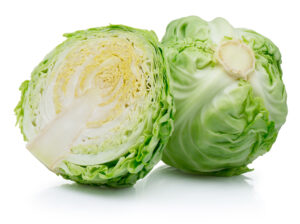
What luck! This year’s “it” vegetable just so happens to be one of March’s star ingredients: cabbage.
Long overlooked for its plebian roots (oh, please), cabbage is topping today’s shopping lists—including chefs’—because it’s affordable, versatile and packed with impressive health benefits.
That it can smell like a thousand gym bags during stovetop cooking is no excuse for not eating this cruciferous powerhouse.
Ironically, the compounds that set our nostrils a-flutter are the very compounds that give cabbage its superfood edge.
Current studies show that cruciferous vegetables, like cabbage, help the body fight cancer—especially gastrointestinal and hormone-related cancers—due to their unique sulfur-containing compounds.
Quite heroically, these pungent warriors have been found to deactivate carcinogens, promote cancer cell death, inhibit tumor growth by blocking new blood vessel formation, and much more. Smell be damned!
Ready for a benefit that will make your skin swoon? Cabbage, especially red cabbage, is loaded with vitamin C, a critical vitamin for the production of collagen. Collagen, the body’s most abundant protein, is quite simply your skin’s best friend, especially during colder months and particularly as we age.
Plagued by dry, itchy skin and wrinkles? Boost your skin-care routine with low-cost cabbage! Discouraged by sagging parts and aching muscles? Supplement your weekly rotation with delicious cabbage! Yes, collagen calls for that dedication. And vitamin C-rich cabbage is a collagen superstar.
Cabbage shines in another important area too: chronic inflammation.
Called the “silent killer” because its negative assault isn’t readily visible, chronic inflammation is viewed widely as a major driver behind many age-related diseases, including heart disease, cancer, diabetes, Alzheimer’s, and kidney disease.
Cruciferous vegetables like cabbage contain a plethora of powerful antioxidants that have been shown to reduce chronic inflammation. As someone who suffers with two autoimmune conditions that inflammation exacerbates, I intend to up my cabbage consumption even more.
Lastly, one cup of chopped raw cabbage has only 20 calories, impressive amounts of vitamins C and K, and decent amounts of several B vitamins.
Helful Tips
Select cabbage that feels solid and heavy in your hand. Precut cabbage, while convenient, begins to lose its vitamin C content once cut. When preparing cabbage, avoid long cooking methods and boiling, which causes vital nutrients to diminish.
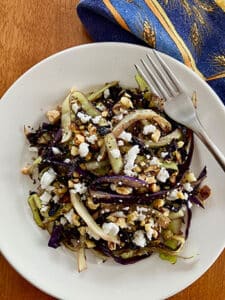 Sauteed Cabbage with Walnuts and Feta
Serves 6-8
Ingredients
▪ 1 small head green cabbage
(or ½ green – ½ red combo)
▪ 1 tablespoon extra virgin olive oil
▪ 1 tablespoon unsalted butter
▪ 1 teaspoon kosher salt
▪ 1/2 teaspoon coarse black pepper
▪ 1-2 cloves garlic, minced
▪ 1 tablespoon apple cider vinegar or fresh lemon juice
(plus more to taste)
▪ 1/2 cup toasted, chopped walnuts
▪ 1/2 cup crumbled feta
(or cheese of choice)
Instructions
1. Remove any damaged outer leaves, then cut the head in half and remove the core.
Place the cut side down on your cutting board and slice it into thin ¼-inch ribbons.
2. Heat a large sauté pan over medium-high heat. Add the olive oil and butter. Once the butter is melted, add the cabbage, salt, and pepper to the pan. Saute for 10 minutes, stirring occasionally, until the cabbage is tender and begins to brown. For better browning, leave the cabbage undisturbed for 1-2 minutes at a time to allow crusty bits and more flavor to develop.
3. After 10 minutes, stir in the minced garlic and cook 1 minute more.
4. Remove the cabbage from the heat and gently stir in the vinegar or lemon juice.
5. Sprinkle each serving with some chopped walnuts and crumbled feta.
 Anne Palumbo is a lifestyle columnist, food guru, and seasoned cook, who has perfected the art of preparing nutritious, calorie-conscious dishes. She is hungry for your questions and comments about SmartBites, so be in touch with Anne at avpalumbo@aol.com.