

By Deborah Dittner
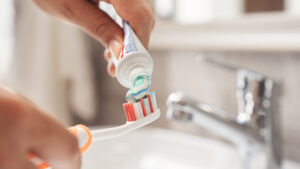 Earlier this year in the March issue of In Good Health, we discussed dental health. As a recap, we talked about the bacteria in your mouth, the use of a tongue scraper, brushing and flossing your teeth, when to replace your toothbrush, oil pulling, salt water gargles, vitamin deficiencies and the importance of whole nutrient dense foods.
Now, let’s take this information a step further.
Whole nutrient dense foods
At the top of the list is fruit and vegetables as these are high in vitamin C and A; both important for gum health and antioxidant protection.
Eating foods rich in calcium (leafy green vegetables, yogurt, milk and cheese) will help strengthen teeth and bones.
Mineral rich foods such as mushrooms, eggs, dark green leafy vegetables (kale, broccoli, spinach), organic bone broth, grass-fed meats and poultry and cheese (preferably soft cheese) helps keep teeth strong.
Remember to limit highly processed and sugary foods as these encourage the buildup of plaques and tooth decay. Snacking throughout the day on carbs provides the bacteria in your mouth with a constant flow of food creating more acid in the mouth which helps in breaking down the enamel on your teeth. If you do need a snack, look for carb-free and rinse your mouth afterward. Make sure you drink plenty of pure clear water as this helps to rinse away food particles and bacteria — and helps to dilute harmful acid caused by bacteria in the mouth.
Maintain good oral hygiene practices
Brush your teeth two times daily with a soft bristled brush and a fluoride-free toothpaste. Avoid fluoride which is a neurotoxin and considered a harmful chemical causing dental fluorosis (tooth discoloration).
An economical and safe toothpaste can be homemade.
My favorite recipe (located in my book “Body Balance Empowering Performance”) is as follows:
Combine equal parts coconut oil and baking soda (6 tablespoons each). Then add therapeutic grade essential oil(s) to taste (15 drops). Anti-fungal, anti-viral, and antibacterial oils: cinnamon, clove, eucalyptus, lemon, and rosemary. Antioxidant; cinnamon, clove, lemon and peppermint.
Once all is combined, store in a glass jar by the bathroom sink. You can also make a tooth powder.
My favorite recipe is by Rosemary Gladstar, consisting of ¼ cup finely powdered kaolin clay, 1 teaspoon baking soda (a mild abrasive), 1 teaspoon finely ground sea salt, and a few drops of peppermint oil. Combine all and mix well. Allow to air dry, then store in an air-tight container. A salt water rinse after brushing (1 teaspoon salt in warm water and rinse for 30 seconds) may help reduce inflammation and decrease bacteria. If you use a mouthwash, consider using a more natural antibacterial, honey, diluted in water. Don’t forget to floss as this helps to prevent gum disease. Applying aloe vera gel to sore gums will be soothing and decrease inflammation.
Digestive issues
If you suffer from any kind of digestive issues, this can decrease the absorption of nutrients and essential minerals necessary to keep your mouth healthy. The eating of processed foods, stress, amalgam fillings, parasites, certain medications and alcohol can all play an effect on how your body absorbs these necessary nutrients and minerals. Eating healthy fats with each meal will help in the absorption of vitamins A, D, E and K. Eating or drinking probiotic foods (sauerkraut, kimchi, pickles, yogurt, kombucha) or taking a probiotic supplement may also aid in absorption. I usually recommend eating ¼ to ½ cup of sauerkraut before at least one meal a day to assist with gut issues. Apple cider vinegar (ACV) has also been beneficial for the gut but can be hard on the teeth therefore ingest with water through a straw.
Don’t smoke, please
Other issues that may need to be addressed is smoking. At all costs, please avoid. Smoking increases the risk of gum disease and oral cancers. Another issue is teeth grinding or jaw clenching often done subconsciously while asleep but can also occur when awake. These concerns can wear down or even fracture tooth enamel and can cause facial or jaw pain. If these issues are a concern, please consult a dentist.
 Deborah Dittner is a family nurse practitioner and health consultant. Her mission is to transform as many individuals as possible through nutrition and lifestyle changes. www.debdittner.com