
Let’s celebrate who we are beyond the mirror. Let’s focus on what really matters in life
By Barbara Pierce
 Suddenly, a sharp knock on my apartment door. “There’s a fire! Get out of the building fast!” a voice shouted.
I was scared. I couldn’t think clearly. I need to take my valuables, I thought. What’s valuable?
Oh, I know! I quickly stuffed a tube of lipstick and my hairbrush in my pocket and ran outside to watch as the firefighters wielded their huge hoses. They rapidly put out the fire which luckily caused no damage to my apartment.
I was in my early 20s when that happened. I am astonished to have that vivid memory. That all I considered valuable was my lipstick and hairbrush.
Yes, I’m ashamed of that memory. How vain I was. How vain I still am, though I’m old — and who pays any attention to old women anyway. I still don’t even go outside without lipstick on and my hair brushed. And, yes, if I had to get out of my home quickly today, I’d take my cellphone, my laptop, my photos, as well as my lipstick and hairbrush.
American culture has successfully co-opted me into the belief that beauty matters more than anything. As women, from birth we’re conditioned to understand that to be beautiful if to be loved, to be special, to be of value. I consider myself to be a kind and caring person, a person of value, brighter than average. (But don’t we all think of ourselves this way?) There is so much more to me than the way I look. And that much more should be far more important than my appearance.
Yet from ancient times, women have been pressured to conform to numerous unrealistic beauty standards. Because there is a very profitable industry in making women feel inadequate. We are easily manipulated into trying to change our appearance; we’re very susceptible to the suggestion that “no one will love you unless you look pretty and, oh, by the way, we have products that will make you look pretty.”
My 22-year-old granddaughter always looks beautiful and put-together, with purple streaks in her blond hair, fancy manicured nails and full makeup. As she’s certainly a victim of this kind of thinking, I asked her about it.
“Society makes us feel like we need to look good,” she said. “You don’t have to do all those things, like wear makeup and get your nails done.”
“I do it for self-love,” she continued. “I want to look good for myself, not because I’m trying to impress anyone. I get my hair done and my nails done because it makes me feel more put together.”
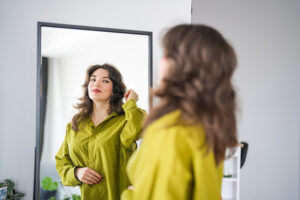
Maybe that’s a somewhat good perspective, because confidence isn’t about who notices you, it’s about how you feel when you look in the mirror. Taking care of yourself is self-respect, not a cry for approval. When you look good on the outside, you feel good on the inside.
We live in a world where people judge your value in seconds or less. Experts say that first impressions are formed in less than a tenth of a second.
In today’s image-obsessed society, the pressure on us to conform to unrealistic beauty standards is more intense than ever. In reading the book “Pixel Flesh: How toxic beauty harms women” by Ellen Atlanta, I became concerned:
“In our digital age, women and girls are subjected to unprecedented levels of scrutiny. Teenage girls take and post selfies and use filters to edit their appearance. Almost half of high school girls consider some form of surgical intervention. Our digital culture creates opportunities for competition and comparison on a scale never seen before. Combined with the advancements in beauty technology, we are left with a culture in which the small imperfections that make us unique can easily be corrected and replaced with standard parts,” said Atlanta.
Unrealistic beauty standards have a severe impact on our self-esteem and body image The connection between body image and mental disorders is alarming. Negative body image contributes to eating disorders, depression, anxiety, suicidal and self-harming thoughts.
In thinking about how we might change this culture, the solution isn’t to convince ourselves that we are beautiful just the way we are and need no enhancing. Instead, I think the way to move forward against this harm is to convince ourselves and the women in our lives that our appearance has absolutely no relationship to our value as a person.
Give compliments to others on personal qualities and accomplishments, instead of appearance. Reprogram our belief that our appearance is the most valuable thing we bring. It’s powerful for a woman to hear that she is a good listener, funny, a great problem solver, etc. Share the effect someone has on you, instead of how she looks.
Let’s celebrate who we are beyond the mirror. Let’s focus on what really matters in life.
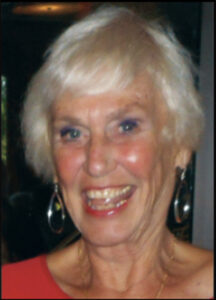 Barbara Pierce is a retired licensed clinical social worker with many years of experience helping people. If you would like to purchase a copy of her book, “When You Come to the Edge: Aging” or if you have questions for her, contact her at barbarapierce06@yahoo.com.